Las Vegas Tennis Star Agassi Considers Real Estate

Retirement has not stopped Andre Agassi. The Summerlin resident and tennis super star from Las Vegas is taking a shot at real estate.

He plans to develop luxury resorts across the world featuring Agassi-Graf Tennis and Fitness Centers. He will work in conjunctions with Exclusive Resorts and He will serve as senior advisor.

Keep watch as developments enter the design and development stages.

Las Vegas Home Selection Increases

The real estate market across the country has been struggling a bit. Well, good news for Las Vegas home owners and buyers: the market has flattened but that is all. Better than expected data signals a very soft landing for the market as it shows resilience.

Las Vegas home buyers are able to select from a great deal of homes, both new and resale.

Select your Las Vegas home today from the Las Vegas MLS.

Listings across the valley continue to increase at a record pace. Astute buyers are grabbing well priced properties and waiting for a projected rise in values within the next 1-2 years. Obviously, there is no crystal ball but several analysts predict growth due to the strong job market and projected increases to population. Come get your home today!

Las Vegas Property with No Cash Down

The No Down Payment program allows you to buy a Las Vegas home with very little money out of pocket. This is great news for all of you who are under the impression that a substantial down payment to buy a home. Whether you are currently a Las Vegas home owner or if you rent and are a first time home buyer and are looking to build equity for yourself, pay close attention to this article, it could make you Thousands in equity.

The Las Vegas No Down Payment program is great for people who want to keep their hard earned money but at the same time make a great investment; this is called leveraging. No Down Payment programs are even great for those who don’t have much money saved but, want to stop padding their land lord’s pockets. This article is to help you understand how the NO DOWN PAYMENT program works.

Let’s go over the loan qualifications...

GLVAR Stats Reiterate It's a Buyer's Market

GLVAR - Greater Las Vegas Association of RealtorsWith another record set this week for the number of resale homes on the market the Greater Las Vegas Association of Realtors (GLVAR), founded in 1947, released statistics reiterating that we are in a buyer's market. Interestingly enough, home prices remain stable.

Reported highlights for August include:

  • The median sales price of a single-family home sold in the Las Vegas area in August was $312,000, up less than 1 percent from $310,000 in July and slightly lower than June's record price of $315,000. This month's median home price represents an annual increase of 1 percent from August 2005.
  • For local condos and townhomes, the median sales price in August was $206,500 -- up 2.5 percent from July and up 3.8 percent from one year ago.
  • The total number of local homes sold increased in August, up 5.1 percent from July to 2,097 homes sold. That is down 37 percent from August 2005.
  • For condos and townhomes, 512 units were sold, up 1.4 percent from the previous month and down 37.1 percent from one year ago.
  • The number of local homes, condos and townhouses listed for sale on the Multiple Listing Service continued to level off in August.
  • The number of available homes listed in the Las Vegas area through August was 20,384, slightly topping the record total of 20,273 set in July. This is an increase of 32.8 percent from last August. The number of available condos and townhomes reached 5,040, a 2.9 percent increase from July and a 90.3 percent increase from last year at this time.
  • Through August, 59.1 percent of all single-family homes and 64.3 percent of all condos and townhomes sold in fewer than 60 days.

Linda Rheinberger, GLVAR President, explains these statistics are further proof of what GLVAR leaders have been describing for months as a buyer's market.
"These statistics reflect sales during the end of summer. This is generally a slower time in our housing market," Rheinberger said.
"We're always cautious about reading too much into results from a single month. But these GLVAR statistics show the pendulum swinging in the direction of buyers, who now have more housing options than they've ever had before."

It's a great opportunity for those looking to enter the market.

National Housing Starts Slump - So, what about Las Vegas?

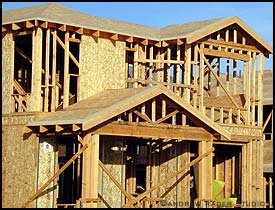
National reports today announced a decrease in housing starts similar to numbers in 2003. They are down 6% in August to set an annual pace of 1.665 million units compared to the revised 1.772 million in July. The government keeps an eye on the pace compared to other factors like inflation and will act according to need with interest rates.

"Permits for future groundbreaking, an indicator of builder confidence, fell 2.3 percent to a 1.722 million-unit annual pace, the lowest in four years. Economists had expected the Commerce Department to report August permits at a 1.745 million pace." MSNBC

U.S. single-family starts are down as well coming in similar to early 2003.

"The report came a day after an industry survey showed that home builder optimism sank for the eighth straight month in September to the lowest level in more than 15 years. The closely watched National Association of Home Builders’ index of homebuilder sentiment declined 3 points in September to 30, the lowest since February 1991, when the economy had slipped into recession."

The Las Vegas Market fits this report as builders continue to give incentives in a saturated market. This trend likely won't affect the valley long term. An interesting report by Channel 3 regarding fuel consumption and valley growth provided some insite. They claim the Las Vegas Valley will add 50% population growth in the next decade.

Their point was supported by industry analyists looking into the demand on current fuel lines built in the 1960's for motorists and the McCarran International Airport. Currently, 1 line brings auto fuel and 1 brings Jet fuel. The McCarran uses some 1 million gallons of fuel per day. Both fuel lines will be at capacity by 2009. Industry analysts understand the impact a fuel cap would have on the ever growing tourist business as well as the residential impact.

According to market statistics, the valley growth is slowing. So, what does it take to grow 50% over the next decade? Currently, there are around 1.8 million people in the valley. 900,000 people will need to be added to the valley in 10 years. That means that 90,000 net residents will relocate into the Las Vegas area. 7,500 people are added on average per month. So, if the market is slow now analysts expect quite a spike again to make up the difference.

So, what does this mean? According to the numbers and trends right now is a great time to own Las Vegas property. Sellers are very negotiable. The future indicates significant growth. And now is a great time to buy! Contact a Las Vegas real estate agent today!

The Las Vegas Fall Season

Not only is the weather great in the fall but Las Vegas real estate is a great buy as well. Typically, the summer selling season is as hot as the weather. As home sellers feel the end of the summer approach they begin to realize they need to get their properties sold.

Like most other real estate markets, Las Vegas moves the most real estate during the summer months. In the fall many buyers have children in school and the need to pick up and move turns into a need to hunker down. Sellers who understand this will cator to the buyers to lure them in. This means buyers get great deals.

This fall is a little extra special. More homes are on the market this fall than any other in Las Vegas History. Now is time to strike a deal and get moved in before the winter months.

NAR Reports Softer Las Vegas Home Prices

Las Vegas home buyers continue to reap the benefits of the influx of listings across the valley. Sellers continue to compete to sell their home in a timely fashion.

Existing-home sales were down in July compared to previous months, while home prices in many areas are slightly below year-ago levels, according to the National Association of Realtors®.

Total existing home sales including single-family, townhomes, condominiums and co-ops dropped 4.1 percent. Higher interest rates dampened sales but that price softening is good news for the housing market because it is drawing buyers. "Many potential home buyers have been on the
sidelines, some 'kicking the tires,' but mostly waiting for sellers to compromise on prices and terms," said David Lereah, NAR's chief economist.


Sellers are recognizing the reality of the current market and they are adjusting accordingly. The good news for sellers is that prices have not dropped significantly. The market has softened but homes are generally holding their values. Buyers coming into the market are able to get great prices with the potential appreciation anticipated within the next few years.

Las Vegas real estate agents are providing great service at this point as it has become a professional's market. Agent representation is improving as fly-by-night agents are dropping out of the race. Clients are benefitting as they grab hold of quality professionals.

How did 9/11 affect Las Vegas Real Estate?

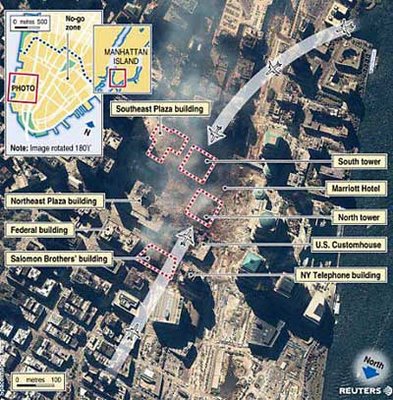
The events that occurred on 9/11 2001 in New York City played a large role in the Las Vegas real estate market. Strangely enough, the effects weren't felt until 2003 and they were part of a huge ripple effect. Today's market still shows signs of the boom it created in Las Vegas housing sales.

In the 90's many Las Vegas home builders took part in the development of the Las Vegas valley. They were typically small and built small groups of homes across the slowly developing valley. By 2001 some of these builders and others moving into Las Vegas from other real estate markets had bought up these smaller companies.

When the tragic events of 9/11 occurred they put a hold on all new housing permit purchases and carefully proceeded with the development of the land they already had. Well, the pause in new permits didn't hit the buyers market for a couple of years because of the land and permits already purchased. However, within a couple of years new homes became scarce as the builders finished up all of the existing projects and waited through the early development stages of the post 9/11 permit purchases. Along with interest rates and an influx of buyers from markets like California the shortage in new Las Vegas homes cause a huge demand on resale inventory. Prices rose and a fiery red market followed. See the full 9/11 affects Las Vegas housing article.

Las Vegas real estate agents remember the amazing events in 2003 as home sellers watched their home prices rise through the roof. In some cases bidding wars took place on the front lawn. The demand was so high homes would not make it to the MLS for marketing. A yard sign would be placed and the phone would ring.


Today's Las Vegas real estate market is adjusting to the rapid increase in prices it saw. It has leveled out as home listings continue to increase. Once again Las Vegas buyers are in the driver's seat.

Our hearts go out to those directly affected by the 9/11 events.

Exploring Lake Las Vegas, Nevada

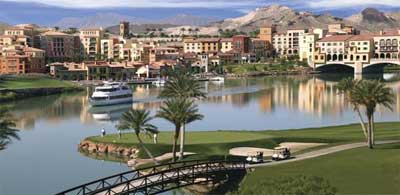
Lake Las Vegas is one of the premier residential areas of Las Vegas. It is a literal oasis of lush lakeside living.


The project began in the 80's with the dream of developer Ronald F. Boeddeker. He saw a vision of a lake in the middle of the desert where people would live in luxury amongst an Italian/European feel. 20 years in the making, 4 golf courses, and 1000 home later it is truely a great place to live.

The project will have about 9000 total homes when it is complete and has about 5 more years of development. Home prices range from $300,000 on up. The properties also range in style, ownership type, and property type. Home buyers may own a condo, single family home, or one of several shared ownership options.

The casino resort is home to many attractions. Shops, concerts, and a gorgeous lake attract locals and visitors alike. Celebrities and upscale residents have chosen Lake Las Vegas as their home.

With a variation of style, price, and so much entertainment, owners find great value in their homes. Request the assistance of a Las Vegas real estate agent to view available properties and options.

The Las Vegas Mortgage Smorgasbord

A guide to knowing your mortgage numbers.
You’ve found your Las Vegas house, you’ve made an offer, but now you’ve got to decide how to pay for it. With all the options available today, trying to decide on a mortgage can be harder than choosing between cheesecake and apple pie at a Swedish buffet. You’ll get the best deal if you know your options — here’s a guide to the basics of the mortgage miscellany:


Fixed-Rate Mortgages
Looking for stability? Found your dream home and plan to stay there for the next 15 years? Investigate a fixed-rate mortgage. Whether you go with a 15-, 30- or the new 40-year fixed-rates, these types of mortgages are like getting an insurance policy on your interest rate — the rate stays the same, so your monthly payment also stays constant. The downside of this most common type of mortgage? While the rates never go up, they also never go down, unless you refinance.


Adjustable Rate Mortgages
Adjustable rate mortgages, or ARMs, have become increasingly popular over the last few years because they start with an attractive, lower fixed-rate, and after an initial period, they adjust according to a specified index. They can look confusing, what with the 3/1, 5/1, 7/1, 10/1 and a handful of other options, but they’re easy to read. The first number indicates how many years your interest rate is fixed; the second number indicates how often the rate adjusts after that initial period is over. For example, in a 5/1 ARM, your interest rate stays the same for the first five years, and then adjusts every year after that, up to a cap that you and your lender agree on. The downfall of these low-rate wonders? After your initial fixed-rate period is over, if interest rates rise, so does your monthly payment. If you can live with that, or if you expect to move in the next few years, then
an ARM can save you money over the short term.


Interest-Only Mortgages
Another increasingly popular mortgage option is an interest-only mortgage. This type of mortgage is best for people whose income comes from infrequent commissions or bonuses, or for those who expect to earn a lot of money over the next few years. With interest-only loans, you pay only the interest on your mortgage for a fixed period of time (usually 5 or 7 years). At the end of this period, you can refinance, pay off the mortgage in a lump sum, or start paying off principal (in addition to your interest payments).


Balloon Mortgages
These mortgages are similar to an ARM, in that you get a low initial interest rate, but after a set number of years — usually 5 or 7 — the mortgage ends and you have to either pay off the remainder (with a “balloon” payment, hence the name) or reset the mortgage at current interest rates. Payments are amortized over 30 years at an interest rate that’s typically lower than a fixed-rate mortgage, so if you plan to move before the balloon maturity date you can usually save money. But if you plan on staying put, and interest rates rise dramatically over the next few years, your payments after a reset could increase substantially as well.


Low-Doc / No-Doc Mortgages
If you are self-employed or have bad credit but a lot of cash, a low-doc or nodoc mortgage is a good option. When considering you for a low-doc mortgage, lenders typically look for two of three requirements: assets, income and credit. If you meet two of the three, for the price of a slightly higher interest rate you can get easy mortgage approval without having to provide a lengthy financial history.


Sorting Out the Acronyms : A Guide to General Mortgage Terms
With all the complicated terminology, acronyms and industry lingo used in the mortgage industry, even the expert linguist can sometimes find themselves baffled. Collected below are a few of the more common terms used in lending today. If you feel like you and your lender are speaking different languages, reading the definitions listed below can help you get on the same page. In addition, look to the bottom of the page for a visual map on how the lending process works. Most importantly, when discussinig mortgages, make sure you talk to a professional that you can trust.


APR (Annual Percentage Rate)
APR is a number that the Federal government calculates to show the total yearly cost of a mortgage as expressed by the actual rate of interest paid. This number is calculated using a standard formula, which includes the base interest rate, points and any other add-on fees and costs of your mortgage.


Conventional Loan
Any non-government loan program is a conventional loan, most of which are provided by banks, savings and loans, mortgage bankers and mortgage brokers (basically, the private sector).


FHA (Federal Housing Administration)
An agency of the Department of Housing and Urban Development. The FHA guarantees certain loan programs for all Americans; insure loans that are made by approved lenders to qualified borrowers; and allows low income and/or low down payment loan borrows the opportunity to purchase a home that they might not have been eligible for under conventional loan programs.

GFE (Good Faith Estimate)
Within 72 hours of signing a residential loan application, the federal government requires that a good faith estimate is sent to the borrower, outlining the costs and charges a borrower is likely to incur in connection with the loan closing. However, the GFE is not a guarantee that the applicant will be approved for the loan or that the final amount will be the same figure; the amount (interest rate, terms, conditions) may change pending final loan approval and down payment terms.

MIP (Mortgage Insurance Premium)
The amount that the FHA charges up front when they insure a loan under one of their programs. The FHA pays the money into a fund where the money is held until it is headed in the event of a default by a buyer.

PMI (Private Mortgage Insurance)
If a mortgage loan exceeds 80% of the sales price of a home, lenders require insurance coverage that will protect them in the event that a buyer defaults on their loan. The cost of PMI is typically charged to the borrower when the loan to value ratio is greater than 80%.

Points
An upfront cash payment required by the lender as part of the charge for a loan, expressed as a percent of the loan charge equal to 3% of the loan balance.

Preapproved
A general term that means that a borrower has completed a loan application and provided their debt, income, and savings information which an underwriter has reviewed and approved.

Prequalification
A preliminary step in the loan application process, a prequalification is a lender’s written opinion of the ability of a borrower to qualify for a particular loan amount. The amount prequalified by the lender is determined based on inquiries into the borrower’s debt, income and savings, and may or may not require a credit check.

Ratios
Ratios are used in the lending industry to determine the probability of a borrower being able to repay a loan – usually this ratio compares the borrower’s fixed monthly expenses to his gross monthly income. Certain lenders have different ratio requirements; for example, the FHA requires that a monthly mortgage payment is no more than 29% of monthly gross income (before taxes), and that the total of mortgage payment and non-housing debts is less than 41% of income.

In lending these two figures are represented as 29/41: 29 is the Front-End Ratio (gross monthly income before taxes divided by monthly mortgage payment (principal, interest, taxes and homeowners insurance); 41 is the Back-End Ratio (gross monthly income before taxes divided by monthly mortgage payment plus non-housing debts, such as car loans and credit card debt).

TLS (Truth in Lending Statement)
A federal law that requires lenders to fully disclose, in writing, the fees, terms and conditions associated with the loan, including the annual percentage rate (APR) and other charges.

VA (Veterans Administration)
The department of the federal government that handles all programs associated with veterans of the U.S. military; in the mortgage industry, the agency guarantees loans that are made to veterans (similar to mortgage insurance), thereby encouraging lenders to make mortgages to veterans.

Las Vegas and the Real Estate Bubble

As real estate values have increased across the nation the media has created a buzz about a real estate "bubble". We have been asked time and again, "but what about the bubble?" or "is Las Vegas affected by the real estate bubble?" Though there is no crystal ball and future unknowns can affect this market, our claim is that there is no "bubble" and the Las Vegas real estate market is not at risk of a catastrophic decrease in home prices.


Analysts who claim there is a bubble that will burst and cause a precipitous decrease in values and demand base their claims on factors that describe the stock market. They pose that real estate is purchased and sold just like stock. If we look a little deeper we learn this isn't true. Stock purchase and sale occurs when certain information becomes available. This information usually becomes available to a large audience who can all go to the same location to buy or sell. One piece of distasteful information to a large group is going to cause a mass rush to the markets. Just the same, great information (i.e the latest tech stock) will cause a mass rush to purchase. Stocks are for investment and are easily disposed of.

Most real estate agents will agree that real estate is not the same as stocks in nature. Purchases and sales are made based on familial circumstance, job growth or decline, or other factors which may or may not relate to others in the market. People need housing and though it is an investment they will buy or sell to put a roof over their head, in many cases even when their situation is difficult. People are not able to just rush on line and place their house sale. It takes time and emotion and threatens a livelyhood.

Very few real estate markets will ever experience a bubble. This bubble describes a rise in prices so drastically that tention is created by all of the hype and once the tention becomes too great for the market it bursts. Buyers no longer are able to buy or want to buy and sellers have to hack at their home prices to get them to sell creating a rapid decrease in values. Every real estate market on all scales experiences cycles. Interest rates, job markets, entertainment opportunities, weather patterns, market saturation, etc. will affect the growth of a market. The Las Vegas market is no different. The rate of growth will rise and drop and typically always continue to grow positively at some rate. In a rare occasion prices will grow negatively to adjust to the market demand. However, baring any events like 9/11 or the entertainment industry demand drying up over night, Las Vegas will usually experience a positive growth in land and home values. The question then becomes, "at what rate will Las Vegas home prices rise?" This answer is more complicated and left for another discussion. The point is that rarely will home prices decline and the bubble effect is extremely unlikely in the valley.

In a situation where Las Vegas home prices do decline the positive swing in the cycle is typically just around the corner. Las Vegas has begun to follow the California market so just as our western neighbor we will see the changes on a cyclical basis. Today's market has Las Vegas real estate agents getting creative to sell homes while buyers are eating up the incentives and negotiating powers they have. In time the opposite will be true once again and sellers will be able to stand firm in their position. It's all part of the real estate cycle.